


Therapy for thromboembolic diseases has evolved, enabling selective targeting within the coagulation cascade. However, inhibition of coagulation factors within the common pathway can compromise hemostasis.1
Despite advancements in treatment, unmet needs still remain—including bleeding risk and recurrent thromboembolic events.8,9
CURRENT TARGETS IN THROMBOSIS PREVENTION2-5
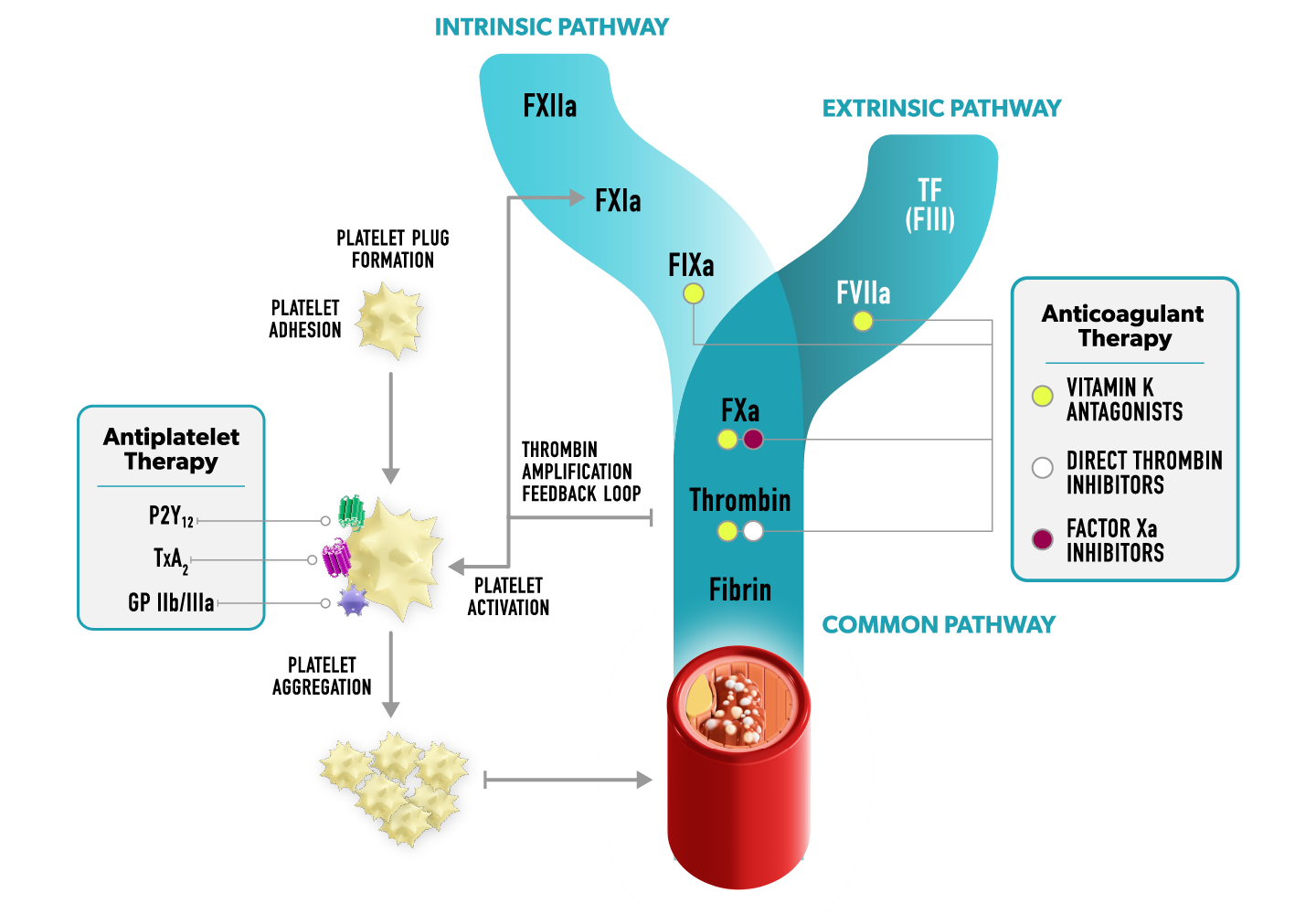
F=coagulation factor; GP IIb/IIIa=glycoprotein IIb/IIIa; P2Y12=purinergic receptor P2Y12; TF=tissue factor; TxA2=thromboxane A2.
Vitamin K antagonists (VKAs), targeting multiple coagulation factors (II, VII, IX, and X)6
Direct oral anticoagulants (DOACs), selectively targeting single coagulation factors (IIa or Xa)
DOACs replaced VKAs as the standard of care for treating many thrombotic diseases, with advantages including more predictable pharmacokinetics, fewer drug-drug interactions and dietary restrictions, and less requirements for coagulation monitoring with similar efficacy.1,7
Antiplatelets
For some thrombotic diseases, such as ischemic stroke, antiplatelet therapy has been the standard of care for prevention of recurrent events.4 Oral anticoagulants are generally not utilized to treat these conditions in the absence of another indication.8
A better understanding of the coagulation cascade has led to the identification of new targets, such as factor XIa (FXIa), which may help to address unmet needs.9
References
- Nopp S, Kraemmer D, Ay C. Factor XI inhibitors for prevention and treatment of venous thromboembolism: a review on the rationale and update on current evidence. Front Cardiovasc Med. 2022;9:903029. doi:10.3389/fcvm.2022.903029
- Angiolillo DJ, Capodanno D. Uncoupling thrombosis and hemostasis by inhibiting Factor XI. N Engl J Med. 2025;392(4):400-403. doi: 10.1056/NEJMe2414209
- Fredenburgh JC, Weitz JI. News at XI: Moving beyond factor Xa inhibitors. J Thromb Haemost. 2023;21(7):1692-1702. doi:10.1016/j.jtha.2023.04.021
- Greco A, Laudani C, Spagnolo M, et al. Pharmacology and clinical development of factor XI inhibitors. Circulation. 2023;147(11):897-913. doi: 10.1161/CIRCULATIONAHA.122.062353
- Stanger L, Yamaguchi A, Holinstat M. Antiplatelet strategies: past, present, and future. J Thromb Haemost. 2023;21(12):3317-3328. doi:10.1016/j.jtha.2023.09.013
- Montinari MR, Minelli S, De Caterina R. Eighty years of oral anticoagulation: learning from history. Vasc Pharmacol. 2021;141:106918. doi:10.1016/j.vph.2021.106918
- Zirlik A, Bode C. Vitamin K antagonists: relative strengths and weaknesses vs. direct oral anticoagulants for stroke prevention in patients with atrial fibrillation. J Thromb Thrombolysis. 2017;43(3):365-379. doi:10.1007/s11239-016-1446-0
- Kleindorfer DO, Towfighi A, Chaturvedi S, et al. 2021 guideline for the prevention of stroke in patients with stroke and transient ischemic attack: a guideline from the American Heart Association/American Stroke Association. Stroke. 2021;52(7):e364-e467. doi:10.1161/STR.0000000000000375
- Fredenburgh JC, Weitz JI. Factor XI as a target for new anticoagulants. Hamostaseologie. 2021;41(2):104-110. doi:10.1055/a-1384-3715